
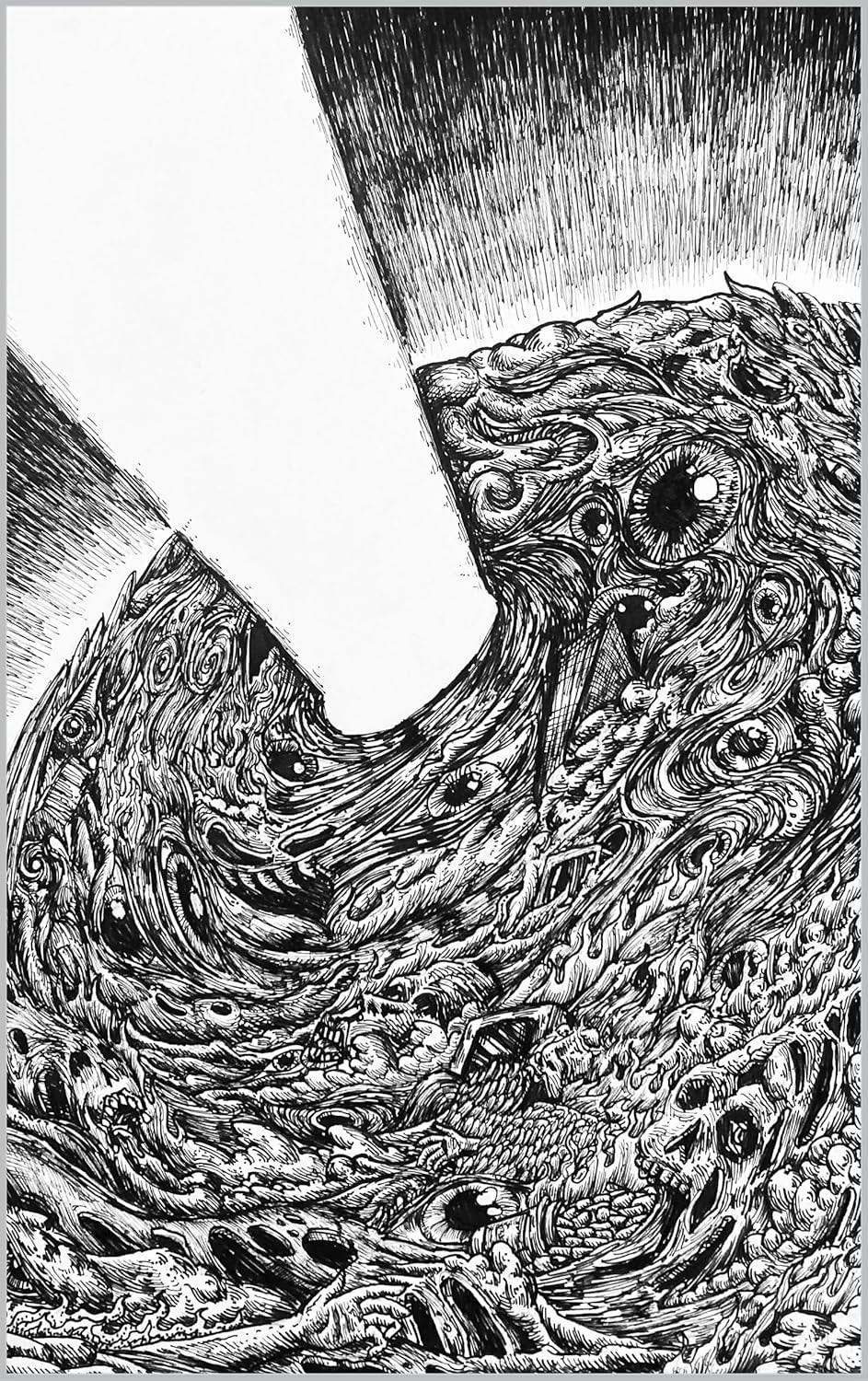
Pornoland by Tyson James A month ago, I quoted this book to my wife: “I don’t mean to be condescending, but your life is a shriveled, distorted caricature of what it should be.” Now this is my kind of literary fiction! Brock Stolitt is a man tragically unable to achieve orgasm, ironically working as the writer of advertising copy for porn. But when his company takes on an adaptation of a medieval erotic novel and he’s the only employee who understands the source material? All right! But little does Brock know that the eccentric billionaire behind the project is also a member of a secret society dedicated to the renunciation of worldly attachment and the attainment of Apatheosis! Pornoland has bites and, yes, throbs, and it makes you laugh. I do have a serious critique of the book, the ending, but no spoilers. You should read it so we can talk about it. 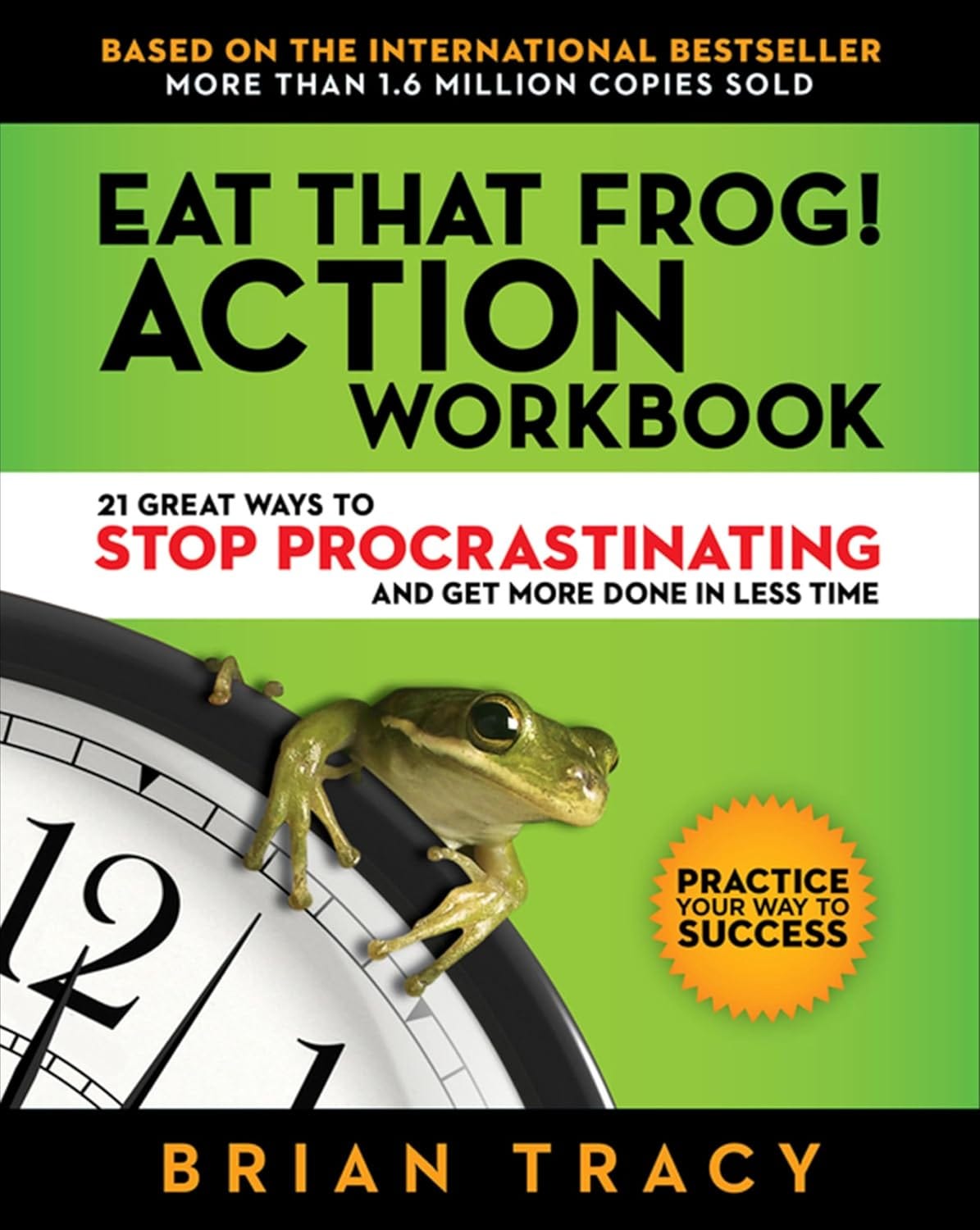
Eat that Frog by Brian Tracy Like Make Time, Eat That Frog advises us to start the day by doing the most difficult thing on our to-do list. It’s not bad advice, although Make Time’s “highlight” concept can also be something you want to do, which I appreciate. Focusing only on what I didn’t want to do made my mornings harder to wake up to, so I don’t recommend it. 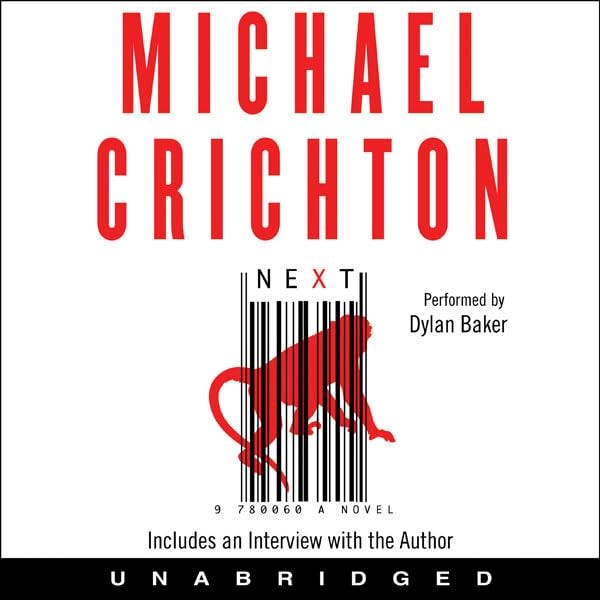
Next by Michael Crichton There’s the sketch of an interesting technothriller, where Big Pharma hires bounty hunters to “repossess” the patented cell-line of an innocent family, but its plagued by a terrible, deal-breaking plausibility gap. Just because some guy’s cells produce anti-cancer cytokines doesn’t mean his daughter’s will, not to mention his grandson’s. Crichton could explaining that problem away, but instead he throws flak in our eyes in the form of endless unrelated stories about apes and parrots and progeria gas. You might say it’s “Love, Actually” but with genetic engineering, and less charming characters. Reall, though, it’s Michael Crichton telling you that people shouldn’t be able to patent genes. Sure. 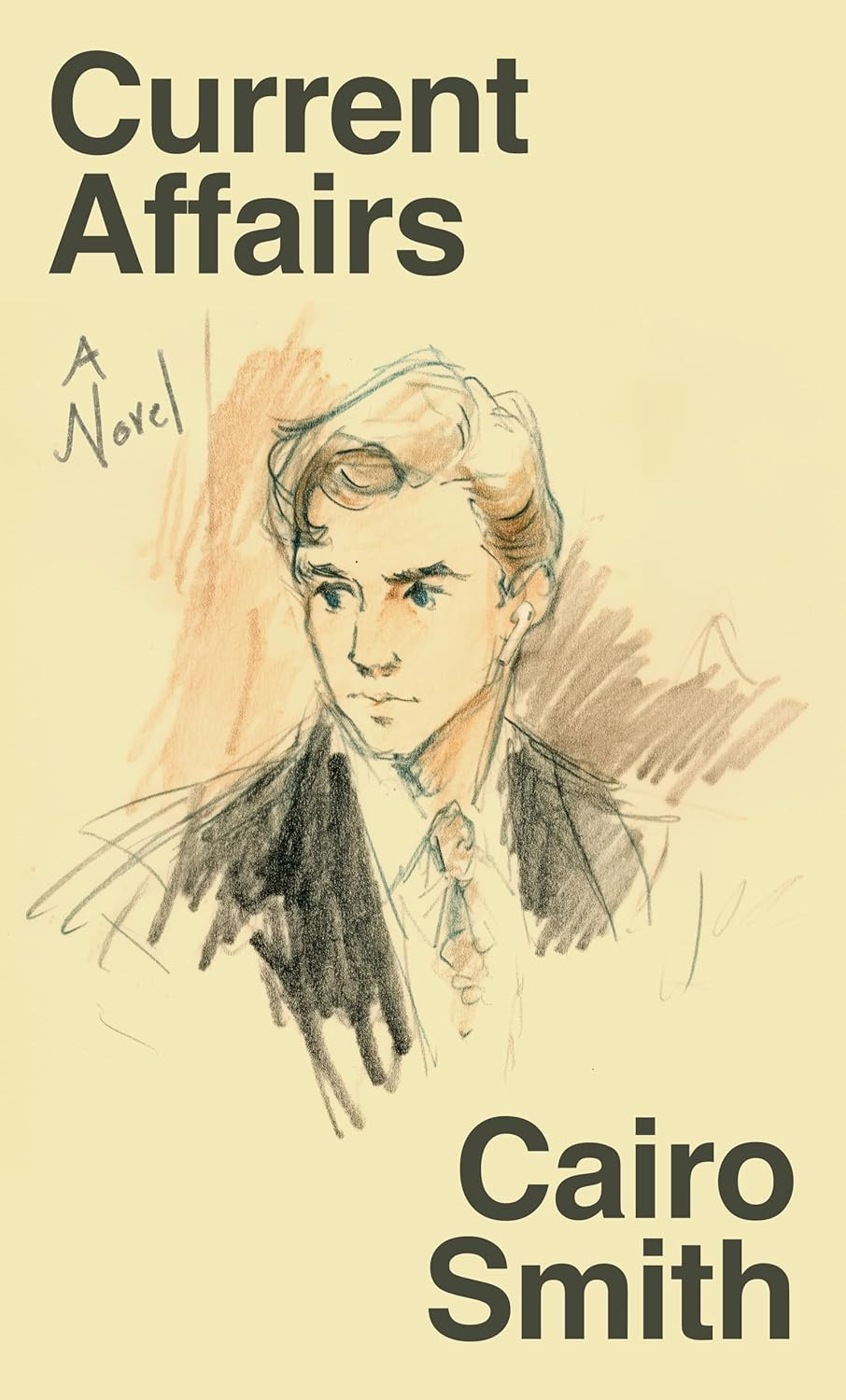
Current Affairs by Cairo Smith Easily the best book I’ve read this year. The best new book since Erik Hoel’s Revelations five years ago. But while Revelations took us into a young man’s crisis of adulthood, Current Affairs takes us through. We meet Calvin in Honolulu, where he’s all het up about a meeting with a woman, not his wife, who he’s been obsessed with since they spoke, once, in high school. They separated, him into New York and the Blue art world, her into Memphis and the Red music world. Which, in the nicest way possible, chewed them both up. How do you grow in a city that rewards you for staying a child? Where each job is faker than the last, and every effort is made to lubricate your life down the path assigned to you? Eventually you look up and realize that you’re a ruin, and you’ve done this to yourself. Please go read Current Affairs, then come back and talk about it with me. My friends and family can’t take it any more. 
The Great Degeneration by Niall Ferguson I had trouble remembering the thesis of this one because it’s so obviously true: Anglosphere countries are in a period of decline. I guess that was harder to see in 2013 than it is now. I have hope, however, that the trends Ferguson points out are cyclical, rather than linear. Things that cannot go on will not go on. 
Flybot by Dennis E. Taylor I don’t blame Copernican , whose review made this book sound interesting. It’s entirely my fault that I read it. In theory, the book is about superhuman AI, what happens if it gets into the wrong hands, and what it decides to do by itself. Those are questions that interest many people, but Taylor has no answers, nothing to say on the subject at all, really. Terrorists might use AI to make bioweapons. The AI might develop consciousness and wonder if humans are worth keeping around. Okay. So what? He fumbles around for something to care about, and fails to find it. 
Red State Mars by Travis Corcoran I already wrote a longform review of this book, which will be available on May 26th. Go buy it. It’s a fantastic scifi adventure, and, I hope the first of very many. 
Castle of Days by Gene Wolfe This one was on my kindle for months as I slowly worked through it. It’s a huge book - an everything-but-the-kitchen-sink collection of Wolfe’s short stories, essays, diary entries, and personal correspondence. I’ll focus on two of those. In “An Idea That…,” Wolfe tells a correspondent what’s not working in her story. He says she has an idea, but that’s like having a tiger. You can’t just show it to people; you have to make it do something. Give it flaming hoops to jump through. “Now let’s see you put your head in the idea’s mouth.” Now, see how he does it: in “Labor Day,” a man awakens in a house with no memories. With him is a woman, apparently his wife. She has no memories either, but they both find thick manuals on their bedside tables that tell them how to be functional grownups: “if your husband does not go to work, you and your children will starve.” What follows is an anxiety-dream about being late for meetings and unclear about what you’re supposed to be saying or writing down in them, while the machine you’re part of grinds the beauty and romance of the world into dog food. Awesome. 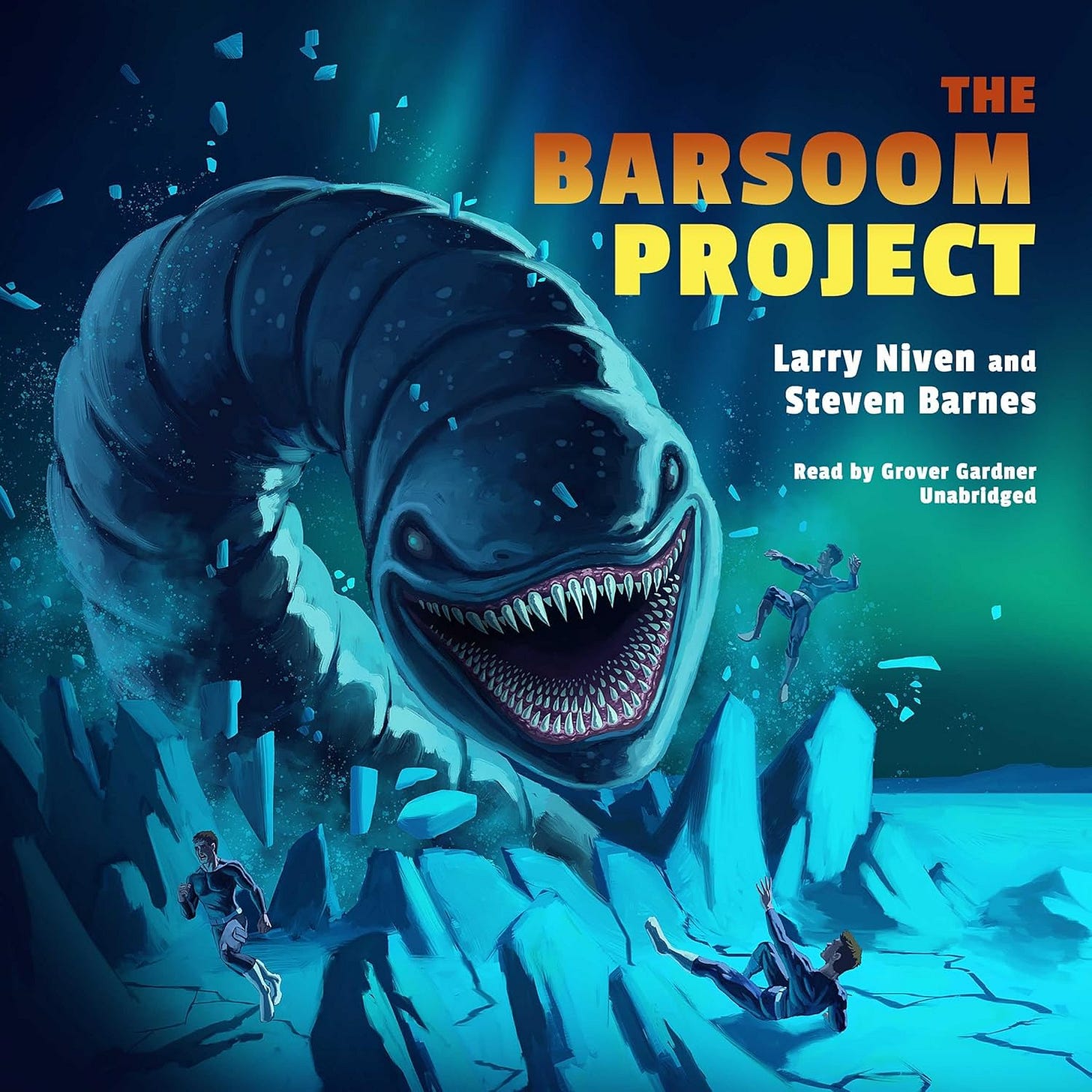
The Barsoom Project by Larry Niven and Steven Barnes This was my second reading. I love the Game Park books, each of which is a layer cake of industrial espionage (the workings of a virtual-reality theme park), psychological drama (the professional and amateur gamers who patronize it), and fantasy adventure (the game, itself.) In reverse order, an evil cabal of Inuit shamans use the magical potential of a crashed Soviet satellite to begin a new Ice Age. This story is packaged into a “fat buster,” designed to exercise and treat people with eating disorders. But one of them is a spy for a cruel Arab petro-prince, who is trying to sabotage the park and their parent company’s bid to terraform Mars. Our heroes have to solve the mystery, find love, deal with their issues, and save the Arctic. A ton of fun. 
Pirates of the Electromagnetic Waves by Fenton Wood Like all of Wood’s books, this one veers between hard-nosed technical detail and bizarre, even fairy-tale fantasy. Also characteristic of the author, it has boys doing things they’re not supposed to do. The stakes in this one were actually rather low, but the atmosphere was good enough to pull me through, anyway. There’s a point when our heroes are walking along the utility platform under bridge, and the mist clears to show them how very far they are above the river. I was in bed, and I had vertigo. And some videos: https://www.youtube.com/watch?v=HXcx5l5SDj0 I love The Book of the New Sun, and it’s got so much to theorize about. Wolfe introduced me to some interpretations I didn’t know about, like that Severian went back in time to help make his younger self less cruel. How could he possibly have been crueler?? Fascinating. https://www.youtube.com/watch?v=vqUTrm3cTUg Phreonotopia has a new series of videos out about new discoveries with a bearing on speculative biology. Very rewarding. https://www.youtube.com/watch?v=pzvxMadFQeA Nothing particularly special about this episdoe. I just like this show. Yes, especially the zeitgeist segment. https://www.youtube.com/watch?v=xZllWiKKPHk Youtube is full of “talking animal” videos that are actually nonsense, but this one has something to it. There does seem to be good evidence that prairie dogs have nouns and can modify them, although not with adjectives. It’s a believably non-human system. https://www.youtube.com/watch?v=Sc-RYjjOtNQ A dark meditation on sexual selection. Nothing is too expensive for reproduction.
0 Comments
So there we were, smuggling art across the Serbian border. Our line of cars drew closer to the waving border guards, and Pavlina and I grew silent. Do you want to sell the Serbs’ cultural heritage out from under them? Nejde, brate. The state requires a certificate from the Ministry of Culture to accompany any priceless, antique masterworks overseas. Apparently, this law also applies to pen-and-ink drawings of superheroes on posterboard, drawn by a comic artist who’s just trying to make a buck. Artyom strode into the lobby of the Ambassador Hotel, two meters tall, waving and grinning, the world’s least-secretive art thief. “Yo, Dan, I got the stuff,” he whispered after we’d hugged in the middle of the lobby, and hoisted his enormous portfolio-filled shopping bag. We opened it right there on a table in the lobby bar, under the shafts of sunlit cigarette smoke. The staff didn’t mind. “These are the Sharp Eye inks, and these are the sketch cards. These are commissions from this year. If our fulfillment center won’t take them.” (They did. Thank you, CRWN.) “And this is for you.” Artyom folded back the portfolio’s flaps to reveal a full 30-by-40 board with the inks for the full-page splash panel when Honza and his bodyguards paddle poor Chal toward the island of the Friendship Temple near the end of issue one. It’s all columns and vertical lines. The canoe and the shadows’ reflections in the canal water point up to tall, rounded cliffs, their forms mimicking and overpowered by the massive, dome-topped tower of the Temple. The dwellings and walkways carved into the cliffs give them a hunched appearance. You can imagine those windows as skull holes, the stairs as teeth. The dome of the Tower is cracked like an eggshell, like a mouth opened to snap at the gibbous moon. Marginalia read: “Добавь блики?”1 and “Градиент идёт сквозь области тени?”2 The affixed sticky note, fluorescent orange, reads: “And this one is 4 u, Dan ❤️” “It can be a conversation piece,” said Artyom. “It’s based on Hitler’s favorite painting.” Artyom explained how all the German intellectuals of the 1930s put up prints of Die Toteninsel, but of course the conversations I’ll start with his artwork won’t be about Nazis. I’ll point at the Friendship Temple and say, “I smuggled that across the Serbian border.” Value is hard, but hardship is also value. Any idiot can download a PDF, you don’t need much genius to print out a high-res PDF and hang it on your wall, but getting your hands on the original ink that flowed from the artist’s actual pen. It’s hard to get that ink shipped across the Atlantic. 
Harder than we’d thought, which is why I have to thank the four governments who acted together with resolve and multilateral coordination to put us in this absurd situation. Picture an American stopped at the Bulgarian border with his suitcase full of stolen Serbian art made by a Russian draft-dodger. Opa. “It used to be you could send out art by national post, but it got harder and harder,” Artyom made palms-down gestures as if shuffling papers on a desk. “I put them in tubes and labeled them ‘gifts’ and ‘documents.’ I sent each one out individually. Then there were these Trump tariffs, and they sent every single one back.” I told him that Bulgaria’s national post just gave up on America for a few months. They refused to send anything at all to the United States, package, postcard, or pigeon. Now they’ve relented and do allow letters through, but if your envelope is too thick, you’d better have a damn good reason. (I did, and my tax return got through.) But we still have courier services. “I almost got them out with DHL,” Artyom said. “I classified them as ‘miscellaneous documents,’ but in the description field I wrote something about art, and the lady was like, ‘now that we know it’s art, we can’t ship it.’ I asked her, ‘can you forget that it’s art?’ But no, she was one of those officials you can’t bribe.” He shivered. “So, when you get to the border…” “I have a plan,” said Pavlina. “Don’t worry.” This was to pack his art at the bottom of our suitcase under a layer of my sketchbooks and art supplies. “They’re your drawings,” she told me in the parking lot the next day. “And I just love them so much, I take them everywhere I go?” I asked. “Yes.” I slid into the passenger’s seat. “But my art style isn’t anything like Artyom’s.” She rolled her eyes and pressed the starter. “Dan, these guys didn’t become border officials because they were highly educated art critics.” As it happened, they waved us right through. I’ll skip lightly over that point in my retelling, and focus my guests’ attention on my dodgy moment at the DHL office in Sofia, when the guy at the table asked me for dokumenti. “But this is my art,” I recited. “It’s a gift.” “Can you open it?” He looked the art over with an eye I worried might be critical and educated. “What medium is this? Fullmaster? Marker?” “Pen,” I said. Maybe he was impressed by my artistic nous, or it might have been the impatient lady behind me in line, audibly sneering at both of us. “Okay,” he said, and turned to the question of packaging. He had other stuff to do. So, I’m sure, do the hard-working staff at CRWN, and the mail carriers, and that impatient old woman behind me in line. The border guard wants to go home and finish working his way through Camus. Now, I don’t know what kinds of jobs our backers have, but at the end of the shift, they have a new comic book to read. Sharp Eye issue 1 has finally been shipped out. Thanks to some skara and coffee in Niš, Artyom and I have a script for issue 2, too. But that’s a story for another conversation. 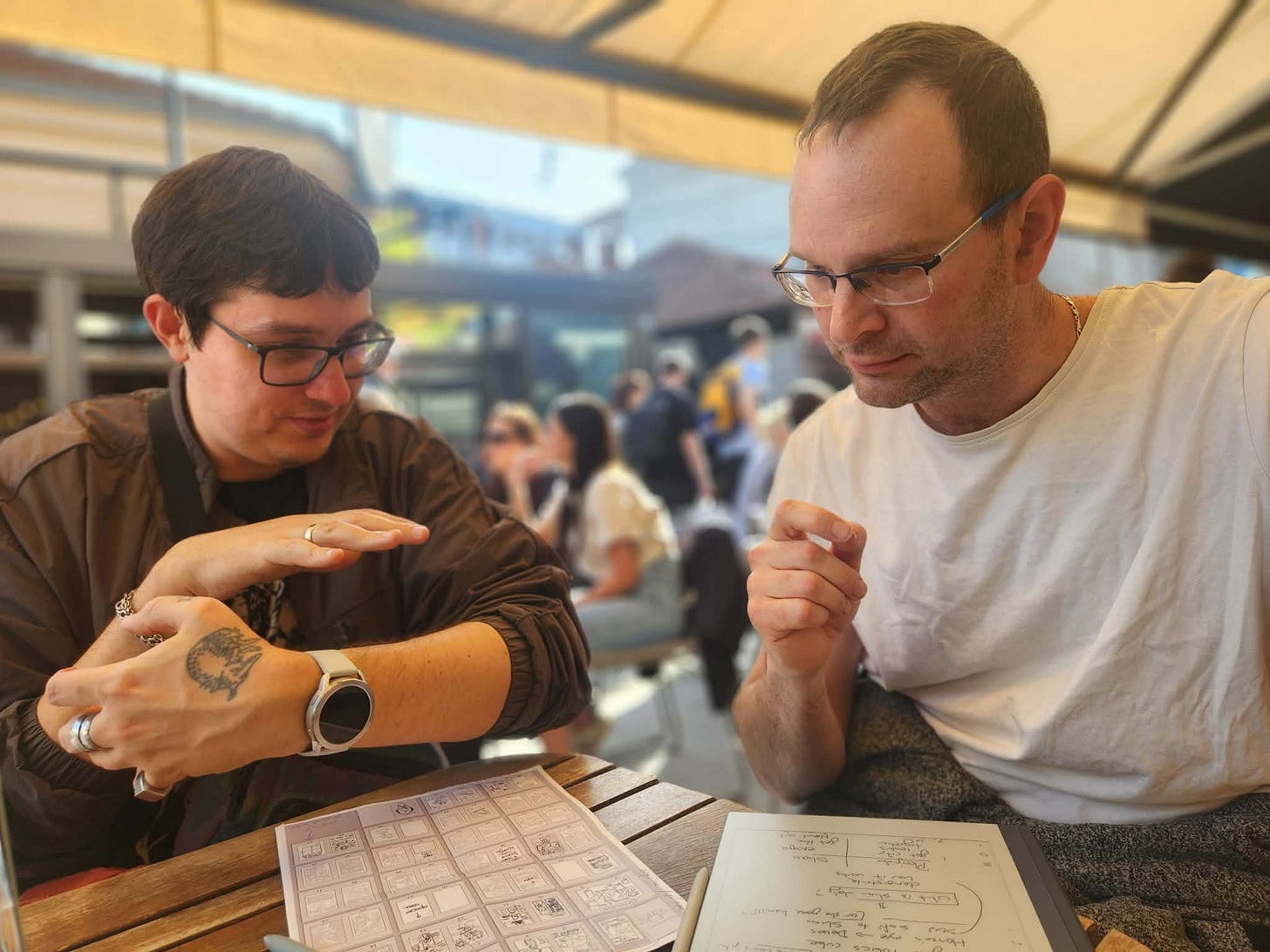
See you next month. 1. Add glints? ↩ 2. Does the gradient go through the shadow areas? ↩ 
The Archetypes and the Collective Unconscious by Carl Jung Jung once interviewed a schizophrenic who claimed the sun had a penis that waved and made the wind. Years later, Jung found an old Greek text describing a tube in the sun disk, “the origin of the ministering wind.” If that sounds meaningful to you, you’d love this book. I found it mostly crazy. In and amidst his motif-lists and mandala-counting, I did find a couple of real creative gems. Buried in this bug collection, there’s a raven that’s been nailed to a wall. I keep feeling like it ought to mean something. 
Komarr by Lois McMaster Bujold Komarr is the perfect synthesis of techno-mystery and social drama, with extra ironic commentary on Miles’s emotional and familial baggage. I've heard it said that Bujold wrote like Mozart, but I'd say it's more like Mandelbrot. You're talking down a grade-schooler who’s locked himself in the bathroom, now terrorists who’ve locked themselves in with their hostages, now the hostage has locked herself in with you! 
Coming Apart by Charles Murray If you think the US is going through some things, but think The Fourth Turning is a bit much, this is the model for you. After World War II, money married brains. The country creamed off its smartest teenagers and sent them all to live together in college dorms. The result was a new “subculture of cognitive elite,” self-reproducing and geographically concentrated, which grew to hate the non-credentialed cousins it had left back in the corn-fields. Maybe this is the cause of the collapse of standardized testing. Somebody read this book back in 2012 and it scared them. 
War by Other Means by Karl Gallagher The War with the Censor has settled into a rhythm: one book we spend with husband Marcus fighting to protect his family from space-villains, and the next we're with wife Wynny back on solid ground, building that family. I like it. Wynny’s now a diplomat, trying to coordinate the liberated worlds who, in fact, can’t stand each other. I appreciate how Gallagher doesn’t lecture us about why the slavers are bad and the matriarchs are good. Wynny has opinions on the matter, but those are plausibly hers. And anyway, the real threats are the liberal democrats, who have run out of money. 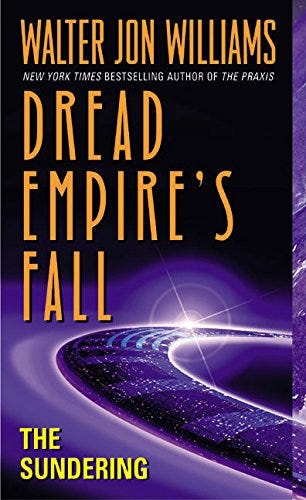
The Sundering by Walter Jon Williams These Praxis books are more fun to remember than to read. You’ve got an interstellar empire ripping itself to pieces after it lost the last of its alien god-kings. You’ve got a navy that suddenly has to win battles instead of pad resumes. There’s space tactics and spy games and the demolition of this whole orbital ring, and I was bored by all of it. The most interesting event in the book happens off-stage as the result of a brief conversation between the two main characters. Without an interior to connect to, it’s all just words on a page. https://www.tortugamedia.net/p/just-leave-the-publishing-industry This one is mine. At the request of Tortuga Media, I’ve written the whole sorry story of the traditional publishing industry as it collapsed around me. It’s worth reading if you’re concerned about what comes next. https://alwaysthehorizon.substack.com/p/utopian-or-dystopian-science-fiction Copernican takes the universal surveillance of Dennis Taylor's Flybot more seriously than Taylor did. Another review that’s much better than the story. https://www.razibkhan.com/p/monlogue-out-of-africa-is-not-dead If you don’t listen to every Khan lecture (why not?), this is a good summing-up of the current picture of human evolution. There were several waves of migration out of Africa, and while most of our ancestry comes from one particular wave, there was quite a lot of “introgression” along the way. https://www.thepsmiths.com/p/review-boyd-by-robert-coram You know an essay is good when I read it to my wife. She disagrees with Mr. Psmith about beating engineers at their own game, but that’s what makes the discussions interesting. I love these “history of engineering” stories, and I never want to work with anyone like John Boyd. https://walkingtheworld.substack.com/p/america-and-public-disorder Chris Arnade usually writes autobiographical essays about his walks in various cities around the world. Here, he brings his humility, compassion, and moral fortitude to a higher level of abstraction: Americans allow each other to face far too much chaos and insanity. https://www.youtube.com/watch?v=YSJY3DvnybE I don’t care so much about RFID or how they pretend to steal money from some famous dude, but this video is worth it for the hilarious Cold War spy story. https://www.youtube.com/watch?v=uYNzqgU7na4 I spent March watching Map Men with my daughters and wife. We all found it hilarious. https://www.youtube.com/watch?v=-RQu2fEa76o What I love about Dan Davis is how he cuts through the political blather that acretes around famous archaeological sites. What was life in one of the first cities actually like? What does the evidence actually tell us? No, Çatalhöyük wasn’t a glorious matriarchy or a verminous hive. It was a real place, where people lived very strange lives. See you next month. |
AuthorDaniel M. Bensen Archives
October 2026
Categories
All
|
 RSS Feed