

A Parade of Horribles by Matt Dinniman I didn’t want to write this review, but it might do someone else some good if I warn them off. You can read my previous reviews about the fun I had for years reading these books. They were great for airplane rides or bed after a long day. But then… It’s not that the author got political, or even that he got Left-political. Yes, the justifications for killing the evil Oppressors became thin, and their crimes against the good Victims became more nebulous (see the execution of D’nadia). And then there was a lot of talking about sex (blow-up dolls, dick jokes, strippers) but very little that was actually sexy. I didn’t like the way the author wrote to and about his readers: “I want people with different points of view to enjoy these books at face value. If I then manage to drill through their thick skulls and make them think about the broader themes and maybe grow an empathetic spark, all the better.”1 But even that didn’t make me stop reading. I finally gave up on a plane, when I had nothing else to do, when I came to this: “Dwight is known for being a complete prick … He’s the type of guy who would one-star an upcoming video game because the artists had the temerity to draw a female character who didn’t give him an instant erection.” All right. I don’t play video games, but (to paraphrase Pratchett2) I know when someone is drawing a line between good and evil and putting me on the appropriate side. I thought we were past this. I thought the Left had figured out that their fake civil war wasn’t going to work. Apparently not. But fortunately there are now books being written that are not about how Blueside rules and Redside drools. I returned Dinniman’s capering agit-prop to Kindle Unlimited, and picked up The Earthen Dark, which enthralled me until landing. 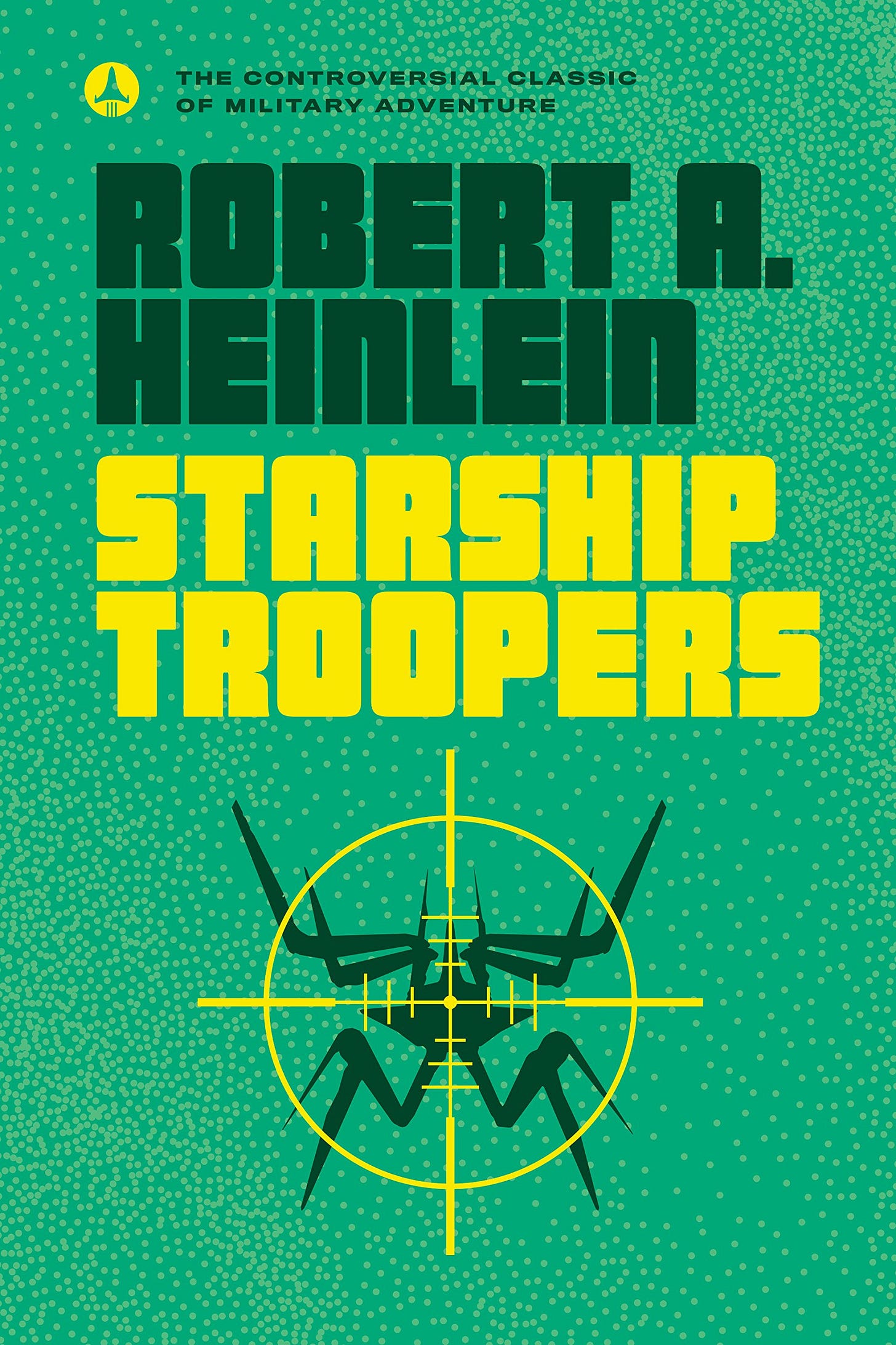
Starship Troopers by Robert A. Heinlein Last month’s Tortuga Book Club book. Read more about it here, where Pavlina speaks with more heart and brain than I can usually manage. All I can say is Heinlein wrote this book when he was angry and having fun. The fun part is everything except the civics classes. About them I don’t have much of an opinion, but Tom Kratman sure does. There’s surprisingly little bug-killing in this book, and not much on-screen romance or even friendship. All that stuff, the blood and soul of the book, is in the background, under the surface, while we follow a somewhat dumb, very honorable mech-soldier’s daily life from boot camp to officer-hood. It’s almost all “what,” without much “why.” But the “why” is there. 
The Information State by Jacob Siegel I was put on to this book by Matthew B. Crawford, who has done more than anyone else to answer the question “What the hell is happening to America?” https://mcrawford.substack.com/p/the-fate-of-liberty-in-the-american In Crawford’s words, “beginning in late 2016, techniques of information warfare developed in the Global War on Terror were turned to domestic purposes by the outgoing Obama administration, to counter the populist threat.” I would like to know more! For example, did you know the failed military surveillance experiments of the Vietnam War ended up imported back to the US as the Internet of Things? So, when someone said, “The Twitter Files were a few people who didn’t have a good time on the internet,” boy was I ready to rebut him. This is a great book to inform your arguments with your friends. 
The Last Human by Isaac Young See my podcast about it for the more complete picture, but in short this is a grim and thoughtful book, better written than The Domes of Calrathia, but still not quite “good.” There were scenes with no point (the spider man), and obscure descriptions. When describing a Dalfaen, for example, the narrator says, “What horrified me was that the unwanted face that seemed grafted onto disobedient flesh was so similar to mine own.” What he means is that these uplifted dolphins had grafted the faces of humans (their creators) onto their flanks. That’s a good and creepy expression of the book’s themes, but you have to work at clearing away the verbiage to form the picture in your head. The Last Human is heartfelt, though, honest and meaningful. That’s more important than mere intransitive verbs or dangling participles. 
The Populist Delusion by Neema Parvini I read this one for the Tortuga Book Club. Professor Axelrod can tell you more, but here’s what I got: anyone who cares about doing good work will inevitably lose his position of leadership to someone who cares about occupying that position. Thus, no organization will be run by anyone other than grasping, scheming, power-hungry bastards. If you think you saw popular revolt against the elites, that’s just what They want you to think! The best we can hope for is that the elite faction most aligned with our interests wins, or that we can learn how to grasp and scheme ourselves. I can’t say I’m convinced. Even if you replace “inevitably” and “anyone” with “usually” and “most people,” I think there’s more to the battle between Machiavelli’s Lions and Foxes. What about the Hunter? Not to mention the cold, uncaring laws of physics. There are dangers to which even rulers must bow. 
How to Read a Book by Mortimer J. Adler and Charles Van Doren I read this book and was soothed, intrigued, excited, and angry. The authors write with admirable clarity and forthright common sense, leaving you with no doubt you’re in good hands. They give you techniques: read with predictions, questions in mind, theories to test on the book, with a pen in your hand. Adler and Van Doren saved Rules for Radicals, another Tortuga Book Club book, because it turned Alinsky’s duplicitous smokescreen into a game. (Question: Whom does Alinsky think he is fooling? Wait until next month to find out.) I’m eager to apply Adler and Van Doren’s tools to all the classic books I haven’t read, or have read sloppily, but that’s also why I’m angry. Why didn’t anyone tell me how to read a book? What the hell kind of education did I get in high school? Thank goodness I’m raising the next generation in Bulgaria, where my eighth grader’s teachers are making her memorize the Iliad.3 
Memory by Lois McMaster Bujold This book is from the stratospheric run of middle-late Vorkosigan adventures, when Bujold reached higher with each book. Memory is very structurally interesting, appearing to meander a whole awful lot (there are scenes where the characters wonder aloud what they’re supposed to do next), but people keep finding things to do and meanings to extract from those deeds. It’s like life, and when you zoom out you see the bigger patterns, and you wonder whether the author knew what she was doing after all. I don’t recommend reading this one first. You need to know who Miles is before you find out who he isn’t. Start with The Warrior’s Apprentice. Peter Northrop’s voice is annoying, and he goes off on these blithe riffs when he feels the need to cover his ass ideologically (“the point of this video isn’t to overhype the promise of AI or be a cheerleader for big pharma’s complicated role in the broader scientific landscape …”). Aside from that, though, these videos are perfect. The animations are fun, informative, and beautiful. The explanations are just complicated enough to be accurate. The beauty of nature shines through everything, transmitted by the creator’s very real love of biochemistry. I recommend starting, of course, with caffeine. https://www.youtube.com/watch?v=fNR-GY-WoAI I’ll be honest. Sometimes these guys are too much for me. Too crude, too loose. They’re not kidding when they say they’re gentlemen retards. This episode, though, they bring in Cremieux, who is nothing if not gentlemanly. Just listen to the way he pronounces “literature.” Cremieux has important things to tell the dude-bros. They want to know. They ask good questions. The funny, enlightening, and (if you didn’t already know about the replication crisis) horrifying conversation that ensues is the best evidence I’ve seen that even the most based of us do still “trust the science.” They just don’t trust scientists. See below. I did not like this video. I include it here because it is a helpful illustration of something dishonest that academics do: dissolve a picture into a mess of exceptions, edge cases, and contradictory assertions. The tidy borders you draw between one language and another break down, don’t they, when we consider minority languages, multilingualism, dialects of varying intercompatibility, and government fiat. Really any accurate map is impossible, and only valuable as raw material for postmodern deconstruction. What angers me is how badly this method of un-explaining serves students. What if I don’t already know what languages they speak in Switzerland, and want you to teach me? Saying “Switzerland has more speakers of Portuguese than Romansh” only makes sense if I already know what Romansh is in the first place. Ridiculing the simple picture gives you no platform on which to build the complex one. Without that foundation, you don’t get enlightened nuance, but murky incomprehension, not to mention the fear of being called out as an ignoramus. Someone de-educated in this way might trust scientists, but only because he can’t understand them, and he’s afraid to admit it. https://www.youtube.com/watch?v=hX21ctsGhNc And that’s not all! My negative reviews from last month sparked some lively debate on Twitter. In response to my disappointment that the space suit on his book’s cover never went to space, Fenton Wood responded: https://x.com/WoodFenton/status/2103554749882830888 And in response to my assertion that Gene Wolfe’s A Borrowed Man was dumb and not worth finishing, ReReading Wolfe directed me to this essay by James Wynn. What I ought to do now is go back and finish reading A Borrowed Man, to see whether Wynn’s theories about the book are supported. Stay tuned. If you disagree with me, tell me so. Maybe you’ll teach me a lesson. 1. From “We are not talking current event politics here” ↩ 2. “the assembled Brethren mentally divided the universe into the deserving and the undeserving, and put themselves on the appropriate side.” And he was paraphrasing Solzhenitsyn. ↩ 3. No, not all of it. The pansies. ↩
0 Comments
This is a guest post by Pavlina, my wife. - Dan We read Heinlein’s Starship Troopers for the Tortuga Book Club, and discussed the book in September, when I was halfway done with it. We talked about the moral philosophy and system of government that Heinlein proposes, but now that I’m about to finish the book, I don’t think it is a proposal at all. Sure, Heinlein probably told us something about how he thinks a society should be run, or “wouldn’t it be nice if it was run this way,” but whether he intended it or not, I think what he really wrote is a very distilled and very true view on what it is like to be a man. 
Starship Troopers is told from the perspective of a young man - Johnnie Rico - who meets men of different ages. Where their lives touch - where they achieve what we call in law and economics a “meeting of the minds” - that’s where Heinlein has something to tell us. The letter from his old teacher. His father, who joined the army after him in his 40s, is now outranked by his son, and is proud of him. It’s in the way these men love: deeply enough to risk their lives, but not showily enough to talk, or even think much, about it. When Johnnie Rico needs to be pumped up to go fight, he doesn’t get a rousing speech about how much he loves the mother-planet. He gets a speech about how much his Mobile Infantry kicks ass.
It’s in the way they fight. It’s physically demanding, hard on the body, psychologically difficult, demanding the perseverance and achievement of turning yourself into a killing machine. That’s what they’re proud of. Male pride is quiet. The soldiers won’t mention their achievements in their letters home. Rico barely mentions his victories to us readers, and we are supposed to be in his head. It’s in the way they’re brave. It’s not that they’re not scared of fighting and dying, they just want to fight alongside their platoon-mates. Their desire to protect each other and do a good job outweighs the fear. This is very different from how female courage works. We need to talk about it and convince each other that we are really brave. Men just get in the combat drop capsule, publish the book, accept the meeting, deploy the app, pick up the phone and call their estranged sister. Then there’s the way Heinlein’s soldiers train. It’s not that each man in the platoon is super strong or an amazing shot. They don’t think about how dedicated they are, or talk about it. They just keep going. When my life and my job get hard, I need to look for reasons to not give up, but men persevere by default. They need reasons to stop. Men are willing to turn themselves into whatever they need to be. I imagine it was the same for the hunters in the Neolithic; most of them were not natural mammoth wrestling prodigies, but the ones whose children survived were the ones who could turn themselves into superb hunters. 
I’ve noticed it working with really good engineers, too - from water supply and construction to software. The exceptional men among them are not just intelligent, they have oriented their whole lives towards one thing. Eating, sleeping, working out, they do everything with the goal of turning themselves into the thing their family needs, or their platoon, or society. Whether they build houses, teach English, or practice medicine, men are capable of practicing and perfecting their craft with every aspect of their lives. I am an entrepreneur, but when my daughter’s homeroom teacher calls, I stop being that and just become Maggie’s mom. Her father, the teacher, teaches her while cooking or assembling a bookcase. Her grandfather, the engineer, helps her optimize stroke angles while taking her out paddleboarding. Men don’t rely on general approval and validation in the same way women do. We run constant opinion polls in our minds to make sure when we do go against society, we’ll be able to anticipate and defeat any opposition. Heinlein’s soldiers are happy to fight and die for a distant colony they have never seen. Societal approval is irrelevant to their decisions. Unappreciative civilians do not throw these men into a crisis of faith because the source of their faith is internal. 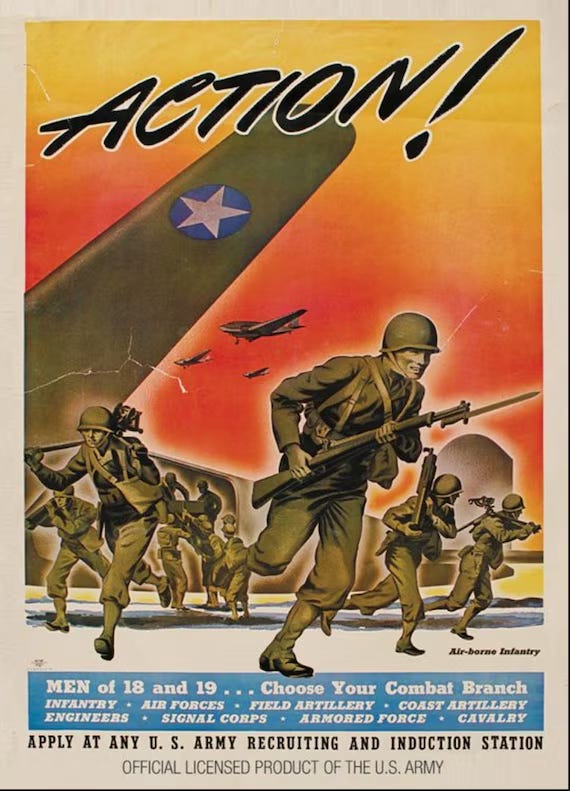
We haven’t talked about this. In the last twenty years it has fallen out of fashion to read books about what it is like to be a man. I have a better chance of finding a book on what it’s like to be a queer, blue-skinned Palestinian soap-maker (yes, this is a real book) than a thoughtful work on what it is like to have sperm. Starship Troopers describes it better than anything I’ve read. How do I know this isn’t just in Pavlina’s head? (What a girl question - none of Heinlein’s men ever wonder about such things.) I’m reading this nearly seventy years after it was written, in Eastern Europe, with almost none of the pop culture references the author could have used to trick me. Starship Troopers reads true. It tells me things about my husband, my friends, my brother, my father, my cousin, my colleagues that I can recognize, things I’ve lived alongside most of my life but had never read as distilled as this. If Starship Troopers were really about the system of government, what do we do with all the scenes that say nothing about society? Enlisting to impress a girl? Becoming friends with someone after you beat each other up? Making a 20-year service decision after a walk? Standing guard outside the officers’ quarters just to hear a female voice, because it’s nice to be reminded of what you’re fighting for. Starship Troopers is not a societal order recipe book. Maybe Heinlein set out to write it that way, but what he actually achieved, through divine inspiration or unintended genius, is a view into the hearts and minds of men. The description is taciturn, wry, and easily missed. This should not be surprising to anyone who has ever talked to a man. 

Every year I come back from vacation, most of the lessons of the last academic year forgotten, and think, why was I doing this? Let the kids wake up half an hour after me? Not no more! Go work out immediately after we’ve packed them off to school? No, I think I’ll potter around for an hour or two, set up some tasks on Claude. I have a new to-do spreadsheet that’s very efficient at turning every random thought into a responsibility, and a new twitch in my left eye. But when I left the house this morning, I sipped the smell of leaves like tea. I focused on something more than two hand-breadths from my nose, and rested my eyes against the yellow grape leaves and powder-blue sky. I take walks every Friday morning. It’s been an ancient tradition for three weeks now. I take about twenty minutes to cross Chavdar Bridge (see the clouds breaking on the bent back of Vitosha) and order a decaf latte at my favorite café. Two weeks ago, they were playing Epic over the sound system, and I almost worked up the courage to tell the barista, “Tazi muzika e ekstra.” But I wasn’t sure that I’d gotten the sentence right. Even if I did, who could guess how she’d respond? I have another week to try again. I sit on one of the uncomfortable smokers’ benches out front and watch the street go by: foreign medical students walking to the hospital where I once spent a month, kids to and from the high school where my wife learned English, street sweepers, dreadlocked hipsters, and gents too old to care. I write there. Last couple of weeks, it’s been conversations with people online, notes to myself about posts I might write one day, getting the bad words out of my head so that there’s room for the good. Those come on the way home. I’ll decide my butt hurts too much to stay on this bench any longer, shoulder my backpack and head for the bus stop. Often I’ll break into a sprint to catch trolley number two, and by the time I’ve beeped my phone on the booper, the first line of something is sloshing in my head: “In three years, it’ll be her registering at the high school.” It’s not easy waking up every morning at six, catching up with August while laying down track for November, but fall is still my favorite season. A school year only makes sense once it’s over. And now there’s this new one. 
See you next month 
So, the sign in front of the SFU Burnaby Campus says: xʷtatəl̕ləm ʔə ƛ̓ səltaɬ sme:nt Xwta7ltáw̓txw tl’a Lheḵw’lhúḵw’aytn Why? Why do that to a language? No, I’m not talking about acknowledging native peoples (the stewards of the land). I like seeing Salishan languages on signs - it’s amazing you can be tooling around the Pacific Northwest and run into something as different from English as Japanese. The problem is the writing system! Imagine you’re a Squamish 1st grader and your tribal school gives you Lheḵw’lhúḵw’aytn to read. What good does this pseudo-international-phonetic orthography do for language revitalization? It’s as if aliens conquered the Earth and made us spell our language ðįgłšlĕęgʷıdž because it’s more “accurate” to the pronunciation. This is base obscurantism, designed to intimidate non-linguists who don’t know what a superscript w symbolizes. Just look at the letters they foisted upon the (sigh) “hən̓q̓əmin̓əm̓” and “Sḵwx̱wú7mesh” languages. Come on. Write them Halkomelem and Squamish, like a normal person. And that’s the secret. We have a perfectly good way to spell words in these languages already. There are Salishan names on places all over the region. It was a simple (two-week) process for me to figure out how to transform the “official” orthographies of these place names to their pronounceable common-use alternatives. taqʷúʔmaʔ > Tacoma
spúyaləpabš > s-Puyalup-amish
nuxwsá7aq > Nuksack
secwépemc > Shuswap-im
sḵwx̱wú7mesh > Squamish
sduhúbš > Snohomish
sqáǰət > Scagit
c̓x̣íl̕əš > Chehalis
ts’elxwéyeqw > Chiliwack
kʷíkʷəƛ̓əm > Coquitlam
sp̓q̓n̓iʔ > Spocan-i
snunéymuxw > s-Nanaimo
w̱sáneć > Sanich
síʔaɬ > Seatl
snpíntktn > san-Penticton
osw̓íw̓s > o-Soyus
shíshálh > Seshelt
qlispé-l > Calispe-l
quw’útsun’ > Cowichan
séliš > Salish
You notice I didn’t get the spelling of every city name exactly right. There’s some random chance in the ways these words got written down. What’s important is to read this damn sign: Tatillim a tla Saltelt Smaent - the “Campus of the Burnaby Mountain” (from the Hancaminam root tatil-, “to learn”). I insist that this is a better writing system than the official one.1 Yes, it’s not always clear whether an l is voiced or not, or where the glottal stops are. That’s true in English as well. As a speaker of the language, you learn where the grace notes go, but the the basic starting point should be clear at first glance. The point here is to make learning Squamish easy. That’s how you keep a language alive. 
See? I fixed it. 1. With the caveat that I don’t claim to have done a perfect job. If I had more time, I’d try to get the epithentic vowels closer to where Salishan speakers put them, rather than English speakers. I’d also try harder to draw the spellings of these languages together. Ideally, a speaker of one Salishan language should have a good idea of the meaning of a sign in another Salishan language. If there’s interest I’ll do it. ↩ |
AuthorDaniel M. Bensen Archives
October 2026
Categories
All
|
 RSS Feed