
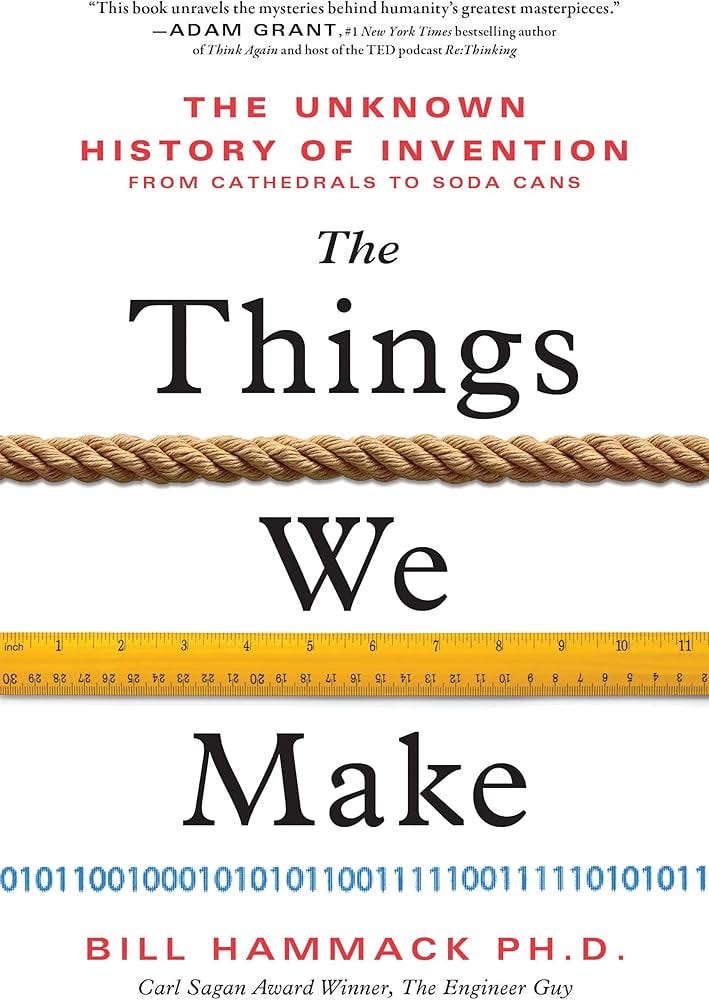
The Things We Make1 by Bill Hammack Few books could deliver so little on such big promises. “How to build a cathedral without…a yardstick” and “From Mesopotamia…to space.” We get one (1) truly interesting historical engineering practice, such as using a rope to determine the proportions of an arch, followed by waffly space-filler until the next chapter and the next ungenerous drop of actual information. Somewhere buried inside him, the author has an engineer who loves solving physical problems. For every cool and inspiring solution, though, he has to tell us about a woman or a minority who did something too. It’s patronizing and tedious. 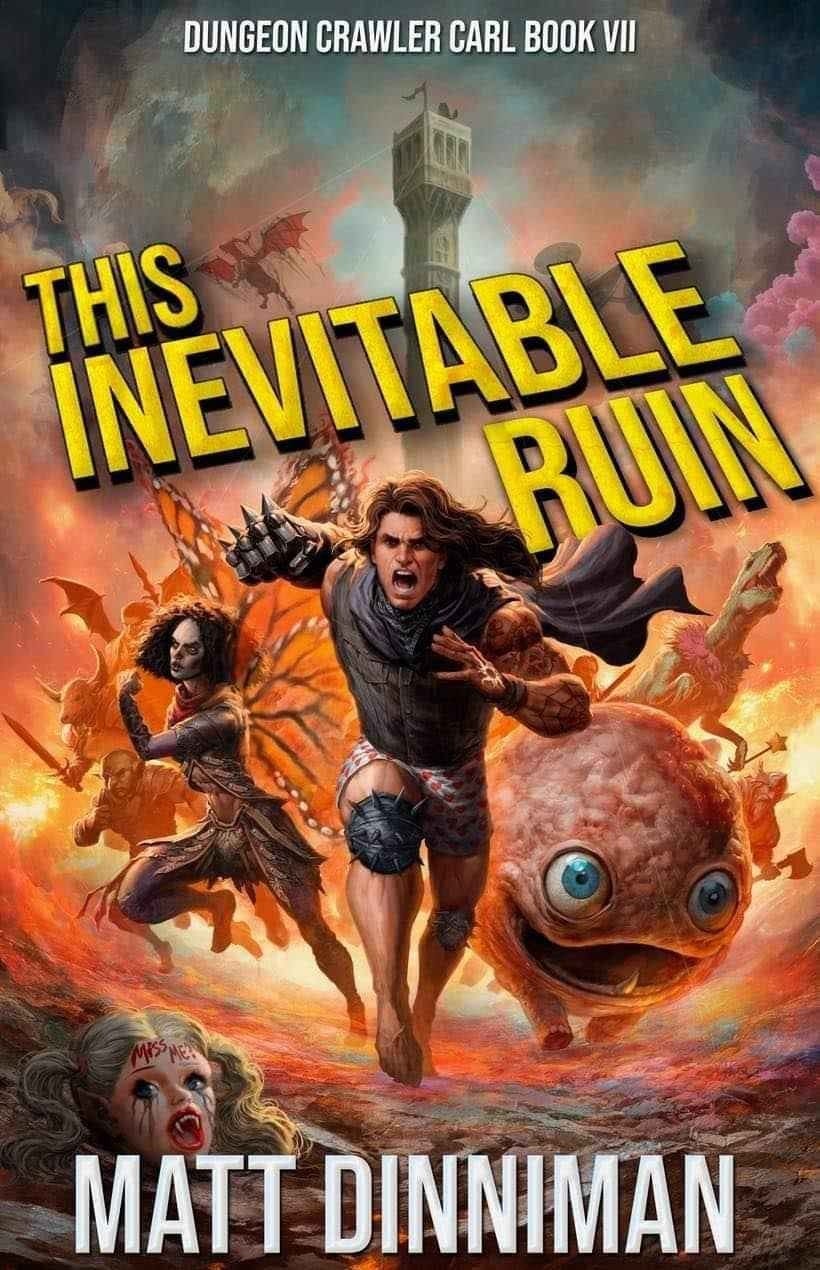
The Inevitable Ruin by Matt Dinniman The chaos and gigadeath visited on Earth spill out into the wider galaxy, alien civilization starts to fall apart, and I’m left cold. There are some standout moments — Carl’s horror at discovering what the Bedlam bride is trying to do, the raid on the Naga royalty — but most of the rest of the book feels like boxes being checked off of Dinniman’s list. Slow down, man. Have fun with this. Get back in touch with the game you were playing in book one, before the stakes got so high. And do a round of structural edits. 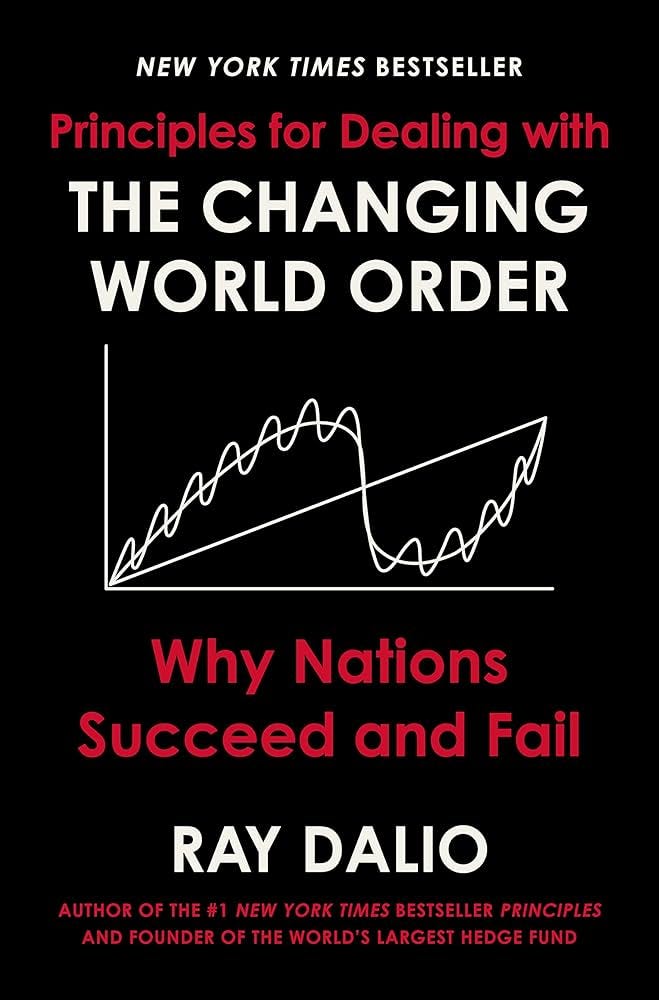
Principles for Dealing with the Changing World Order by Ray Dalio I found Principles to be both useful and heartfelt. For this book, on the other hand… Calibrate your expectations with the following statement by the author on Marx: “I didn’t appreciate that Marx was a brilliant man who came up with some good theories and some seemingly bad ones that he would probably agree were not adequately tested and refined by the evolutionary system he espoused.” Okay, Grandpa. Dalio is best when he talks about his expertise, which is finance. Going to him for political-philosophical — or worse, economic — insight is like going to a mechanic for lessons in particle physics. 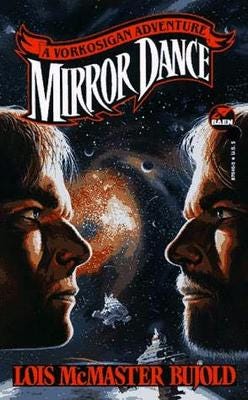
Mirror Dance by Lois McMaster Bujold This one is so good it’s almost painful. Bujold was at the top of her career here, pulling off a complex plot that is both beautiful and symbolic. Imagine a car engine that teaches you about the nature of trust, is perfectly symmetrical, and wins Formula One races. As for the story itself, it’s best if you start with one of the earlier books: The Warrior’s Apprentice or of course Shards of Honor. You need to know Miles, Mark, Bell, Ellie, and Aral Vorkosigan before Bujold smashes them. https://gallagherstories.substack.com/p/zombie A fun, interesting short story about corpse disposal and orbital mechanics. It promises, it delivers. https://marilynsimon.substack.com/p/courage-and-honour-against-timidity Read this to see health speaking to sickness. Sickness does not respond well, but the lesson is good: we have abandoned the distinction between authority and tyranny. We need to find it again, and not just for the sake of our sex-lives. https://www.youtube.com/watch?v=5aEio_yDEc8 I include this one for the very Australian joke about tasting toxic plants. https://onlyvariance.substack.com/p/getting-jacked-is-simple I’ve been applying the advice here for a month and I can say it works. Quote, “it’s the final rep.” 1. Links to books are Amazon affiliate links ↩
0 Comments
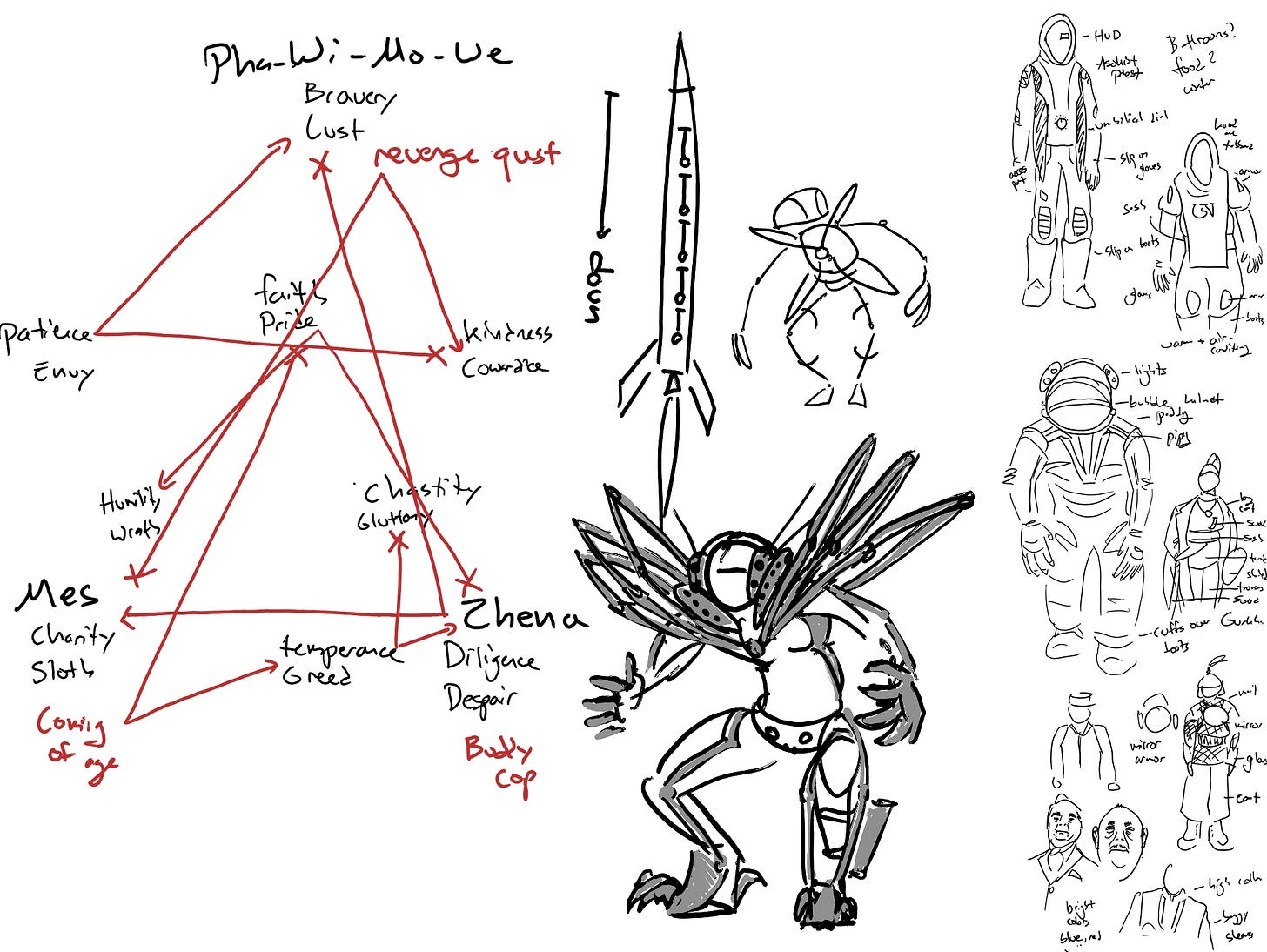
No SerialsFirst thing: I stopped serializing Tyrannosaur Queen. After a lot of soul-searching and back-and-forth, I came to the conclusion that people like to read serializations when the book is still unfinished, and they can affect the writer’s choices through their comments. Since Tyrannosaur Queen is already finished, there’s no reason for people to read the serialization. They can just buy it. (or listen to it on Audible!) SketchesWhat I’m doing instead is sharing my process. On Substack, you’ve seen the map I made for my current project, The Eccentrics. Over on Patreon, you can find my “sketches,” including notes, literal drawings, and occasionally complete scenes. They’re all very rough, but you do have the opportunity to stick your oar in and tell me what you think. https://danielmbensen.substack.com/p/the-tectons Ask Me AnythingSpeaking of which, come talk to me on Zoom on the 22nd. I’m doing an Ask Me Anything for paid subscribers and $3 plus patrons. Details here. If you haven’t read about my adventure last month lifting an old man, you can do that here on Substack, or here on This is Bulgaria which will now feature my newsletters as a monthly column. https://danielmbensen.substack.com/p/even-lifting TyposIn other news, I spent a couple of days this month grinding over the Sharp Eye script one more time. The comic book is with the printers now, but it’s not too late to order a copy. And wouldn’t you know it, I publish Wealthgiver I on Amazon, and I immediately see formatting mistakes and a typo on the cover. I’ve fixed those, and I’ve put Volume 2 up. It’s available for pre-order. That’s it for this month. Tell me: what do you want to see more of from me? 
I was somewhat dissipated on a Friday afternoon, pottering around, waiting for my Aeropress to drain, when Pavlina called. Friday is when I catch up. I write outside my current book project and spend a couple of hours dealing with the week’s pile of 5-minute tasks. I prepare the experimental classes I teach to Pavlina’s employees. I do the laundry and finally get a full work-out in. I don’t schedule any other classes that day, so I should have plenty of time, which is dangerous. On a Monday, I might not have time to do anything fun, like derive the pronunciation rules for a future dialect of English spoken in Orbit in the twenty-third century (try it!) On a Friday, though, I indulge. I indulged hard. I opened the Speech Accent Archive at eight and pulled myself away at two. On other days, I’ll channel my create energy into writing a scene or an essay in a couple of hours. On this Friday, I dissipated it into a long list of sound changes. Imagine hooking a water jet cutter up to a shower head. PSH! Which reminded me I needed to take a shower. And work out, and deal with the cat box, laundry, dishes, and my classes for next Monday. Most importantly, I had the experimental class coming up in an hour and a half and I hadn’t finished designing it. I told myself I still had time, and I did, but my head was still spinning, and mostly filled with phonemes. What I really wanted to do was figure out how to code “/t/ and /d/ become flaps between sonorants.” I made myself coffee and tried to stand strong against temptation. I like to think I would have really prepared for that class, if Pavlina hadn’t called me. “Dan, I need you to come to Druzhba. Dyado Kolyu has fallen and we need you pick him up.” I grabbed the Aeropress. “What about the security guard?” He’d helped before. “No, he’s useless. Take a taxi and come.” Pavlina’s grandfather has senile dementia, and her grandmother has bone spurs. Pavlina, her cousin, her mom, and her aunt all rotate through the apartment, making sure the grandparents are never alone. They’ve hired a caregiver, but none of them can lift the grandpa off the floor. “Isn’t there any other man in the apartment building?” “No. Nobody will help. Dyado Kolyu screams. They just won’t do it.” “It’ll take me half an hour to get there.” She told me she’d also called her mother and her cousin’s husband, but they were further away than me. I had to come now. “You’ll have to cancel our class.” “No, I won’t. You have time. Come.” I chugged the coffee and called the taxi. 
When they aren’t in their village in western Bulgaria, Pavlina’s grandparents live in an apartment in Druzhba - “Comradeship” - a late Communist-era neighborhood with a little lake and a view of Sofia’s handful of skyscrapers. It requires a bit of negotiation to get there from my house by car during the day, but I arrived no more than thirty minutes later. There Pavlina’s grandpa was in the apartment, on the floor just outside the bathroom. He’d slipped while being escorted out of the shower, and Pavlina and her grandma had spent the next hour or so trying to find someone to lift him. When that didn’t work, they’d dressed him and surrounded him with pillows. Pavlina’s grandma hobbled in circles in the living room, shouting contradictory orders, while the old many looked owlishly up at me. Dementia teaches you a lot about habit. Dyado Kolyu often asks who I am, and needs to be reminded that I’m Pavlina’s husband. He used to remember Pavlina as a college student, but now he mistakes her for her mother. He is habituated to me, however. He’d yelled and scared off the strangers Pavlina had brought to lift him, but when I held out my hands to him, he took them immediately. “You can’t lift him that way,” said Pavlina. “Do you need help? Should I push on his back? Babo, tiho!” “I’m not lifting him. He just grabbed my hands. It’s okay. Where are we putting him?” “I don’t know. I’ll get his walker. Just a second. I come help lift him. Babo, mlakni!” It had been a long hour for them. I walked my hands down the old man’s arms and found his armpits. Today I hadn’t worked out. The other days of the week, though, and the weeks before that, I’d maintained my discipline, and worked out. I lifted him. Dyado Kolyu spends most of his time sitting, so his feet are swollen and round. Even with his legs under him, he couldn’t support his own weight. I just held him by the armpits until Pavlina arrived with his walker. With the handles in front of him, habit took over. Dyado Kolyu let go of me, grabbed the walker, and thumped off to the living room. There, unaided, he lowered himself into his armchair and relaxed, watching the TV. Baba Vesa was ebullient with relief. “Haide da slagam supa. Momcheto e gladen.” I wasn’t hungry, but I ate some of her soup and talked with Pavlina, who called off the cousin’s husband and told me she’d cancelled our class after all. Pavlina has in past told me that Dyado Kolyu is what success looks like. He’s near the end of his life, and disease has taken his mind, but he’s surrounded by his family, who love him. They bought him an apartment and make maintain through it a steady stream of food, medicine, heat, and grandchildren. What more could you ask for? Eldercare bodily assistance robots? Pavlina is browsing Japanese websites, comparison shopping. Consciousness uploads? That won’t be you. Bodily Immortality? Brother, you’re not going to get it. If I’m lucky enough to get as old as Dyado Kolyu, I’ll have to depend on my habits, too. Build your strength. Do what needs to be done. Be grateful. Someone will come and lift me up, too. 
See you next month 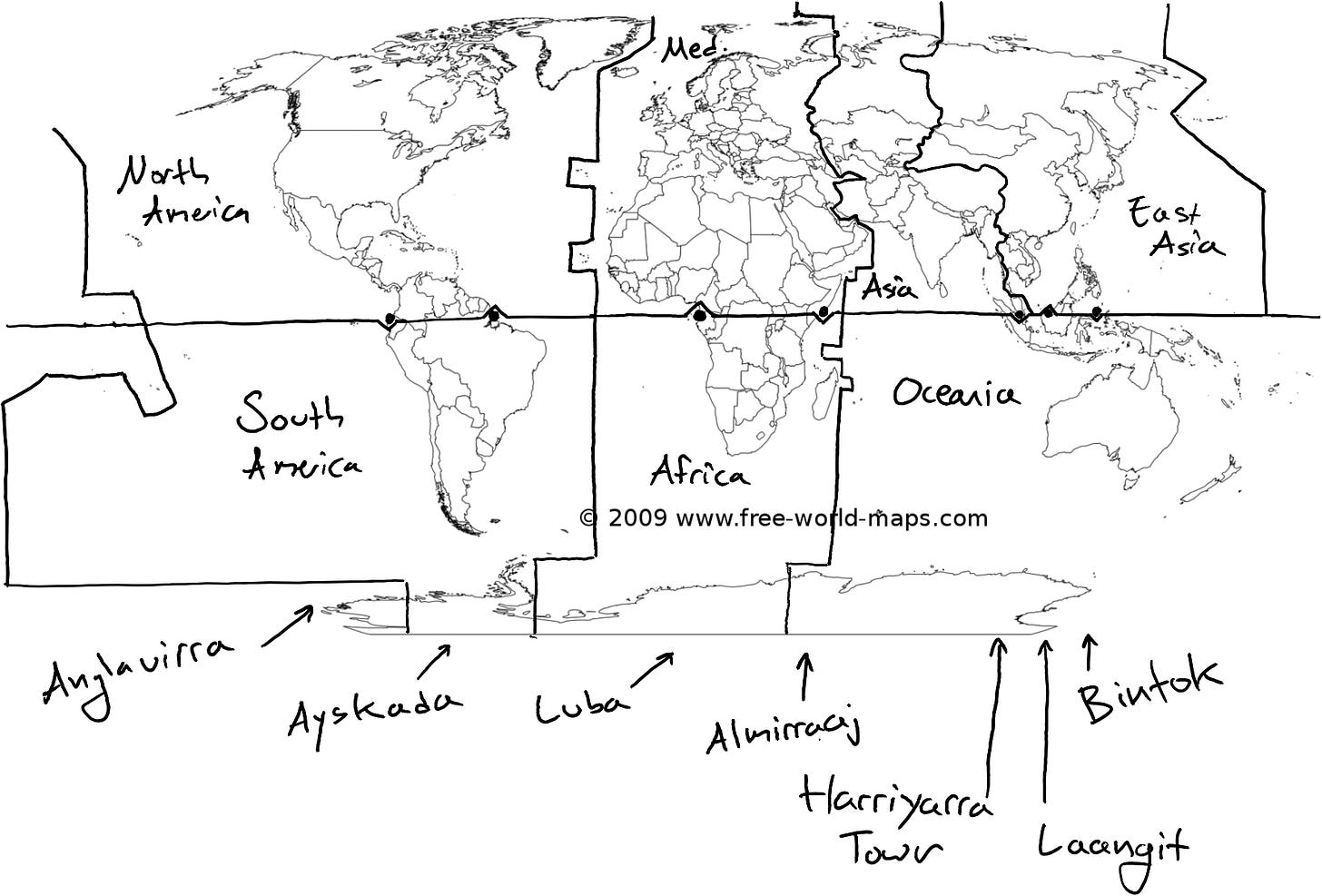
This is worldbuilding for The Eccentrics, a scifi story I’m working on about space barbarians. Although the Orbital Authority calls them “tectons” in the American tradition, the borders of these administrative divisions have been shifted to reflect their new function as catchment zones for each of the seven space elevators: North America, composed of the old Middle Tecton and South America north the Equator. Served by the Englevirre, known for its stately palaces. Most prominent state1: the Republic of Meyark, capital Meyark. Major religions: Christianity, Presidency, Asokism. South America, composed of the rest of the South Tecton. Served by the Ayskada Tower, known for its warm hospitality. Most prominent state: the Presidium of Brraziu, capital Saumpau. Major religions: Presidency, Christianity, Asokism. Mediterranea, composed of the old East Tecton and Abraham League, as well as Africa north of the Equator. Served by the Tower Almirraaj, known for its history and sport. Most prominent state: the Shvitsarr Confederation, capital Tsirrikh. Major religions: Islam, Judaism, Christianity. Africa. Served by the fully autonomous Luba Tower, which transports no people. Most prominent state: the Kingdom of Lasuutuu, capital Maseru. Major religions: Asokism, Christianity, Islam. Asia, composed of the old Indian Union, its satellites, and Nevkia. Served by the Harriarra Tower, known for its casual atmosphere. Most notable state: the Painless Empire, capital Ppampe. Major religions: Asokism, Hinduism, Islam. East Asia, composed of the old West Tecton, its satellites, Hanguo, Hongwok, and the island of Java north of the Equator. Served by the Bintok, known for its comfort and efficiency. Most notable state: the Empire of Meylga, capital Wiktol. Major religions: Asokism, Christianity, Paganism. Oceanea, composed of the old Southeast Tecton, plus Indonesia south of the Equator. Served by Langit Tower, known for its rustic charm. Most notable state: the Presidium of Shtraiya, capital Sinay. Major religions: Presidency, Asokism, Christianity. Holdings in Antarctica mostly follow pre-Reconstitution national claims, except for European land, which has been ceded to Africa. 1. Although the Proclamation of Global Reconstitution grants “unrestricted choice to every person,” in fact any terrestrial monarch, committee, nation, state, or tribe rules only on sufferance from the Orbital Authority. ↩ |
AuthorDaniel M. Bensen Archives
October 2026
Categories
All
|
 RSS Feed