
|
This is a guest post by Pavlina, my wife. - Dan We read Heinlein’s Starship Troopers for the Tortuga Book Club, and discussed the book in September, when I was halfway done with it. We talked about the moral philosophy and system of government that Heinlein proposes, but now that I’m about to finish the book, I don’t think it is a proposal at all. Sure, Heinlein probably told us something about how he thinks a society should be run, or “wouldn’t it be nice if it was run this way,” but whether he intended it or not, I think what he really wrote is a very distilled and very true view on what it is like to be a man. 
Starship Troopers is told from the perspective of a young man - Johnnie Rico - who meets men of different ages. Where their lives touch - where they achieve what we call in law and economics a “meeting of the minds” - that’s where Heinlein has something to tell us. The letter from his old teacher. His father, who joined the army after him in his 40s, is now outranked by his son, and is proud of him. It’s in the way these men love: deeply enough to risk their lives, but not showily enough to talk, or even think much, about it. When Johnnie Rico needs to be pumped up to go fight, he doesn’t get a rousing speech about how much he loves the mother-planet. He gets a speech about how much his Mobile Infantry kicks ass.
It’s in the way they fight. It’s physically demanding, hard on the body, psychologically difficult, demanding the perseverance and achievement of turning yourself into a killing machine. That’s what they’re proud of. Male pride is quiet. The soldiers won’t mention their achievements in their letters home. Rico barely mentions his victories to us readers, and we are supposed to be in his head. It’s in the way they’re brave. It’s not that they’re not scared of fighting and dying, they just want to fight alongside their platoon-mates. Their desire to protect each other and do a good job outweighs the fear. This is very different from how female courage works. We need to talk about it and convince each other that we are really brave. Men just get in the combat drop capsule, publish the book, accept the meeting, deploy the app, pick up the phone and call their estranged sister. Then there’s the way Heinlein’s soldiers train. It’s not that each man in the platoon is super strong or an amazing shot. They don’t think about how dedicated they are, or talk about it. They just keep going. When my life and my job get hard, I need to look for reasons to not give up, but men persevere by default. They need reasons to stop. Men are willing to turn themselves into whatever they need to be. I imagine it was the same for the hunters in the Neolithic; most of them were not natural mammoth wrestling prodigies, but the ones whose children survived were the ones who could turn themselves into superb hunters. 
I’ve noticed it working with really good engineers, too - from water supply and construction to software. The exceptional men among them are not just intelligent, they have oriented their whole lives towards one thing. Eating, sleeping, working out, they do everything with the goal of turning themselves into the thing their family needs, or their platoon, or society. Whether they build houses, teach English, or practice medicine, men are capable of practicing and perfecting their craft with every aspect of their lives. I am an entrepreneur, but when my daughter’s homeroom teacher calls, I stop being that and just become Maggie’s mom. Her father, the teacher, teaches her while cooking or assembling a bookcase. Her grandfather, the engineer, helps her optimize stroke angles while taking her out paddleboarding. Men don’t rely on general approval and validation in the same way women do. We run constant opinion polls in our minds to make sure when we do go against society, we’ll be able to anticipate and defeat any opposition. Heinlein’s soldiers are happy to fight and die for a distant colony they have never seen. Societal approval is irrelevant to their decisions. Unappreciative civilians do not throw these men into a crisis of faith because the source of their faith is internal. 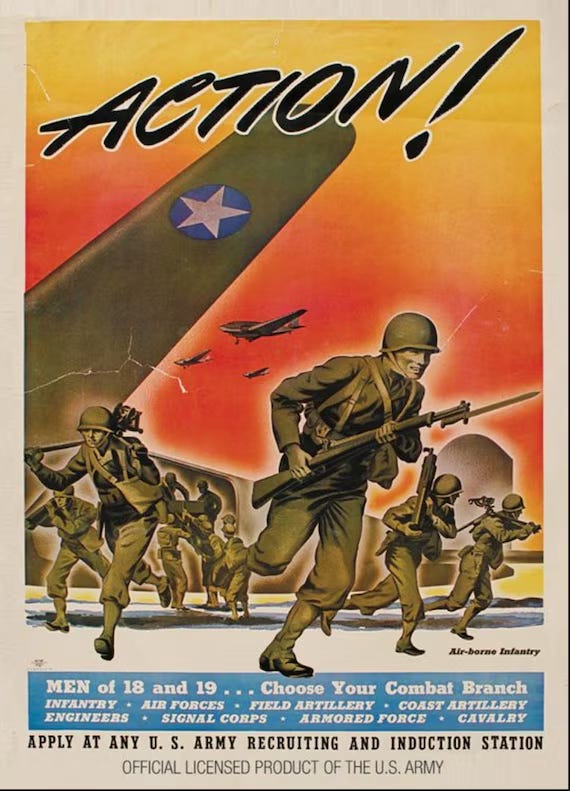
We haven’t talked about this. In the last twenty years it has fallen out of fashion to read books about what it is like to be a man. I have a better chance of finding a book on what it’s like to be a queer, blue-skinned Palestinian soap-maker (yes, this is a real book) than a thoughtful work on what it is like to have sperm. Starship Troopers describes it better than anything I’ve read. How do I know this isn’t just in Pavlina’s head? (What a girl question - none of Heinlein’s men ever wonder about such things.) I’m reading this nearly seventy years after it was written, in Eastern Europe, with almost none of the pop culture references the author could have used to trick me. Starship Troopers reads true. It tells me things about my husband, my friends, my brother, my father, my cousin, my colleagues that I can recognize, things I’ve lived alongside most of my life but had never read as distilled as this. If Starship Troopers were really about the system of government, what do we do with all the scenes that say nothing about society? Enlisting to impress a girl? Becoming friends with someone after you beat each other up? Making a 20-year service decision after a walk? Standing guard outside the officers’ quarters just to hear a female voice, because it’s nice to be reminded of what you’re fighting for. Starship Troopers is not a societal order recipe book. Maybe Heinlein set out to write it that way, but what he actually achieved, through divine inspiration or unintended genius, is a view into the hearts and minds of men. The description is taciturn, wry, and easily missed. This should not be surprising to anyone who has ever talked to a man. 
0 Comments
Leave a Reply. |
AuthorDaniel M. Bensen Archives
October 2026
Categories
All
|
 RSS Feed